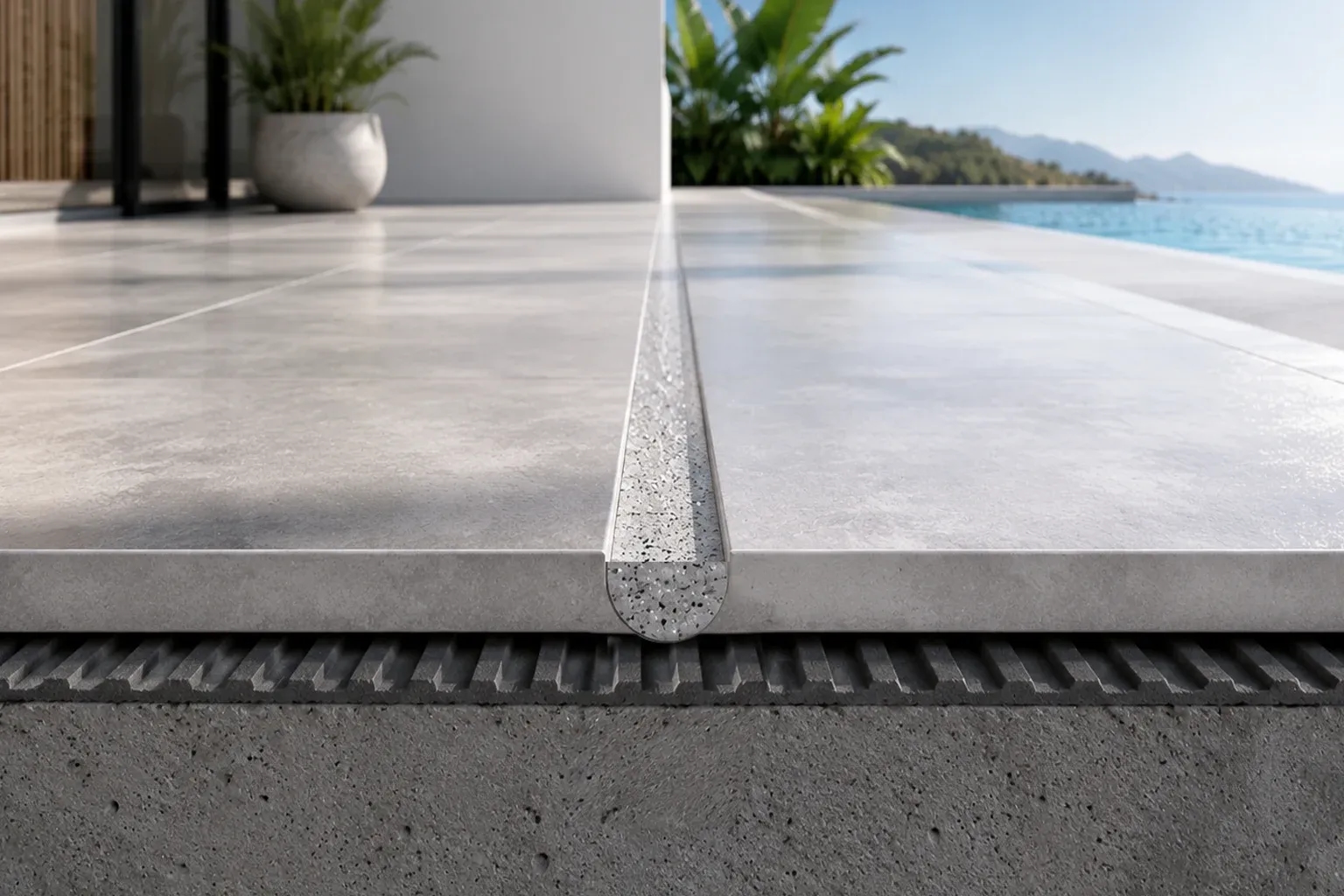
Strength Enhancement: How Admixtures Double the Performance of Standard Grout
03 September 2026A gecko weighs about 70 grams, yet it can hold 133 kilograms to a wall. The secret isn’t brute force — it’s a smarter kind of grip. Grout works on the same principle. It may look like a cosmetic detail piped between tiles, but it does real structural and protective work. Upgrade standard grout with admixture and its performance climbs sharply in strength, bond, and durability. The result is a joint that does far more than fill a gap. It shields the whole installation against wear, movement, moisture, and time.
Why Grout Performance Matters
On many jobs, grout gets treated as decoration. On site, it’s part of the system that keeps tiles stable, edges protected, and joints sealed. Weak grout cracks, powders, stains, or pulls away from tile edges — and once that happens, water and everyday knocks find their way in.
Standard cement-based grout does a fair job in calm, controlled conditions. But it has limits. It tends to be brittle, fairly porous, and slow to forgive any movement in the substrate. That’s exactly where admixtures earn their keep. Blend grout admixture with tile grout instead of water, and you get a denser, stronger, more flexible joint.
What Admixture Changes
Admixture blends synthetic polymers into the grout matrix. Those polymers change how the grout cures and how its internal structure holds together. Instead of leaning on cement hydration alone, the grout gains a second binding mechanism — a polymer film that forms as it dries.
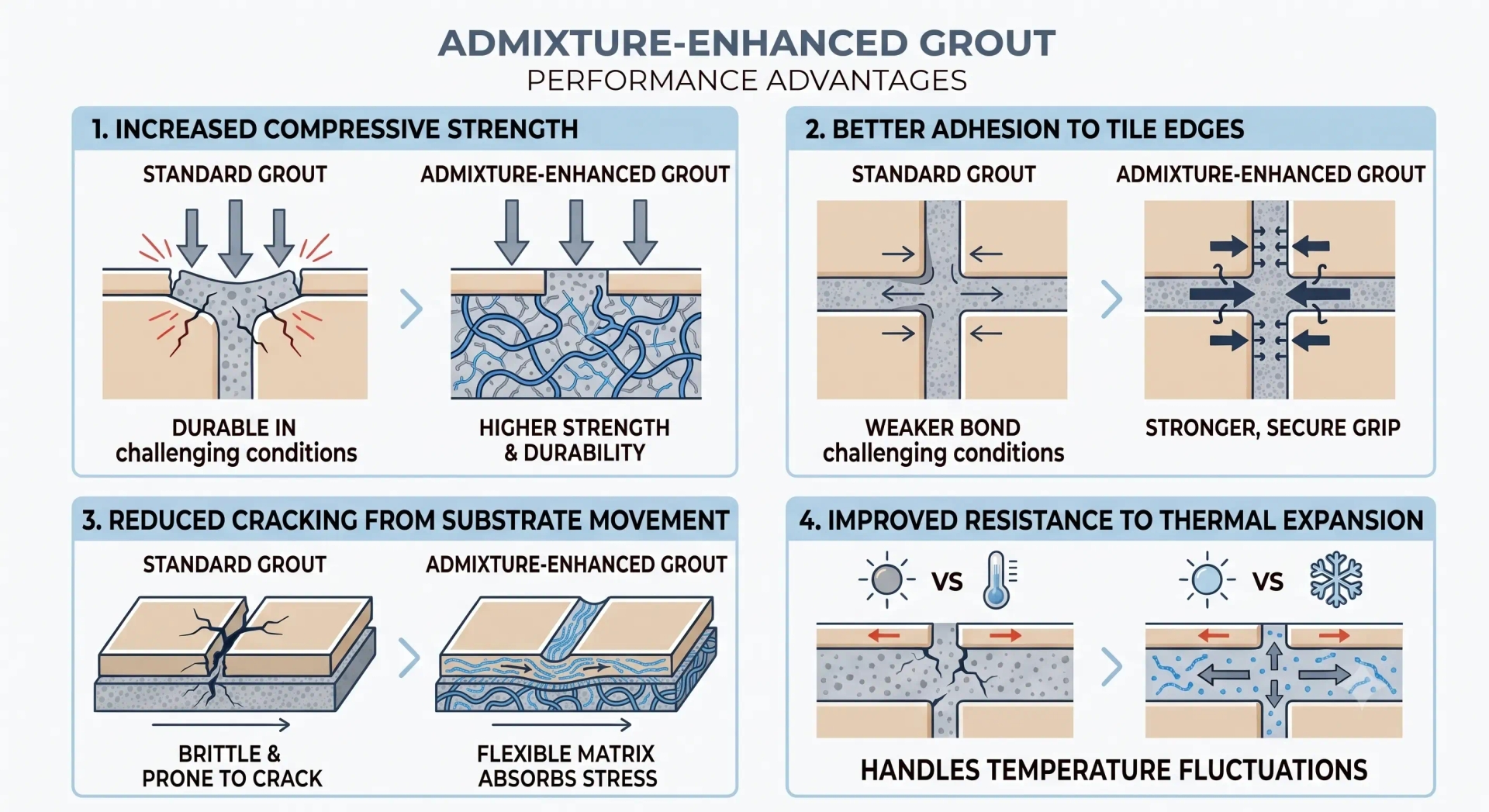
That one change ripples through everything. The grout turns less brittle and more cohesive, which lifts both strength and resistance to surface wear. It also grips tile edges more firmly, cutting down edge breakdown and keeping the joint intact under daily stress.
Higher Compressive Strength
One of the biggest wins from admixture-enhanced grout is compressive strength — how well a material resists being crushed under load. In floors, counters, and wall systems, grout joints take a constant beating: foot traffic, furniture dragged across a room, vibration, the scrub of a cleaning brush.
Admixture-enhanced grout usually cures into a denser internal structure than standard grout. Fewer voids, fewer microcracks, more load carried before anything gives. In plain terms, the joint is far less likely to chip, crumble, or compress under pressure. That matters most in commercial spaces, busy family homes, and anywhere durability counts as much as good looks.
And this isn’t just a better number on a test chart. Higher compressive strength buys you a longer service life. A stronger joint keeps its shape and support around every tile, heading off the slow breakdown that eventually loosens tiles or lets water creep in.
Better Adhesion To Tile Edges
Adhesion is another area where modified grout pulls ahead. Standard grout can bond unevenly to tile surfaces, especially when the tiles are smooth, dense, or low-porosity. Weak bonding leaves tiny separations at the edges — open doors for dirt, water, and wear.
Polymers in admixture improve wetting and bonding right at the tile interface. The grout flows into the joint more readily and locks onto the tile edges as it cures. That tighter edge bond helps the grout resist pulling away under vibration, cleaning, or small shifts in the installation.
This is no small thing, because tile edges are among the most vulnerable parts of any tiled surface. When the grout stays tightly bonded, it spreads stress evenly across the assembly — less edge chipping, and a finish that stays clean and steady over the years.
Resistance to Cracking
Cracking is the most common way standard grout gives up. It shows up when the substrate shifts a little, when heat drives expansion and contraction, or when the installation takes the same stress again and again. Rigid, brittle grout simply doesn’t absorb those forces well.
Admixture-enhanced grout copes better because it brings more flexibility and cohesion to the joint. The polymer network inside the cured grout lets it tolerate small movements without splitting. Rather than snapping into brittle fractures, the material can flex slightly and recover.
To be clear, this isn’t elastic like a sealant — it keeps its cementitious character. But it’s markedly more crack-resistant than basic grout. In the real world, that extra tolerance makes a real difference wherever there are temperature swings, radiant heating, strong sun, or minor structural movement.
Thermal Expansion and Substrate Movement
Every tiled surface moves a little. Concrete slabs expand and contract. Backing boards shift. Walls and floors flex under load. Temperature changes add their own repeated stress cycles that slowly tire out rigid materials.
Standard grout is often the first part of the system to show the strain — hairline cracks along the joints, especially where movement concentrates. Once a crack opens, it can widen, collect grime, and let moisture through.
Admixture-enhanced grout takes these conditions in stride. The polymer content improves strain tolerance, so the joint stays intact when the substrate moves or the temperature rises and falls. That makes it the smarter pick wherever stability can’t be fully guaranteed — kitchens, bathrooms, balconies, façades, and heated floors all gain from the added resilience.
Strength Without Sacrificing Workability
One of the quiet advantages of modern admixtures is that they raise performance without making the grout fussy. In many cases, polymer-modified grout spreads smoothly, packs neatly into joints, and finishes more consistently than unmodified mixes.
That translates to better joint fill and fewer voids — which, in turn, means more final strength. A well-packed joint is far less likely to crack or weaken down the line. So the benefits of admixtures aren’t only chemical; they show up in cleaner application on site, too.
Where The Performance Difference Shows Most
The edge that enhanced grout brings is clearest in demanding settings. In a dry, low-use room, standard grout may hold up fine for years. But push the conditions, and the gap between standard and polymer-modified grout widens fast. The applications where it counts most include:
- High-traffic floors, where impact and abrasion never let up.
- Wet areas, where standing water finds any weak joint.
- Temperature-variable spaces, where expansion and contraction are constant.
- Large-format tile installations, where edge stress runs higher.
- Substrates with minor movement, where crack resistance matters most.
In places like these, stronger grout isn’t a luxury. It’s part of protecting the performance of the entire tile assembly.
Long-term Durability Benefits
The real payoff of admixtures is long-term stability. A joint that resists crushing, bonds tightly to tile edges, and rides out movement will last longer and call for fewer repairs — lower maintenance costs, and a finish that keeps looking the part.
Durability shapes hygiene and moisture control, too. Cracked or separating grout is hard to clean and quick to trap contaminants. Stronger, better-bonded joints stay intact and sealed, so they perform and look better for longer.
For builders, tile installers, and homeowners alike, that’s the core of what polymer-modified grout offers: a longer, healthier life for the tiled surface, with fewer of the usual failure points.
The Bottom Line
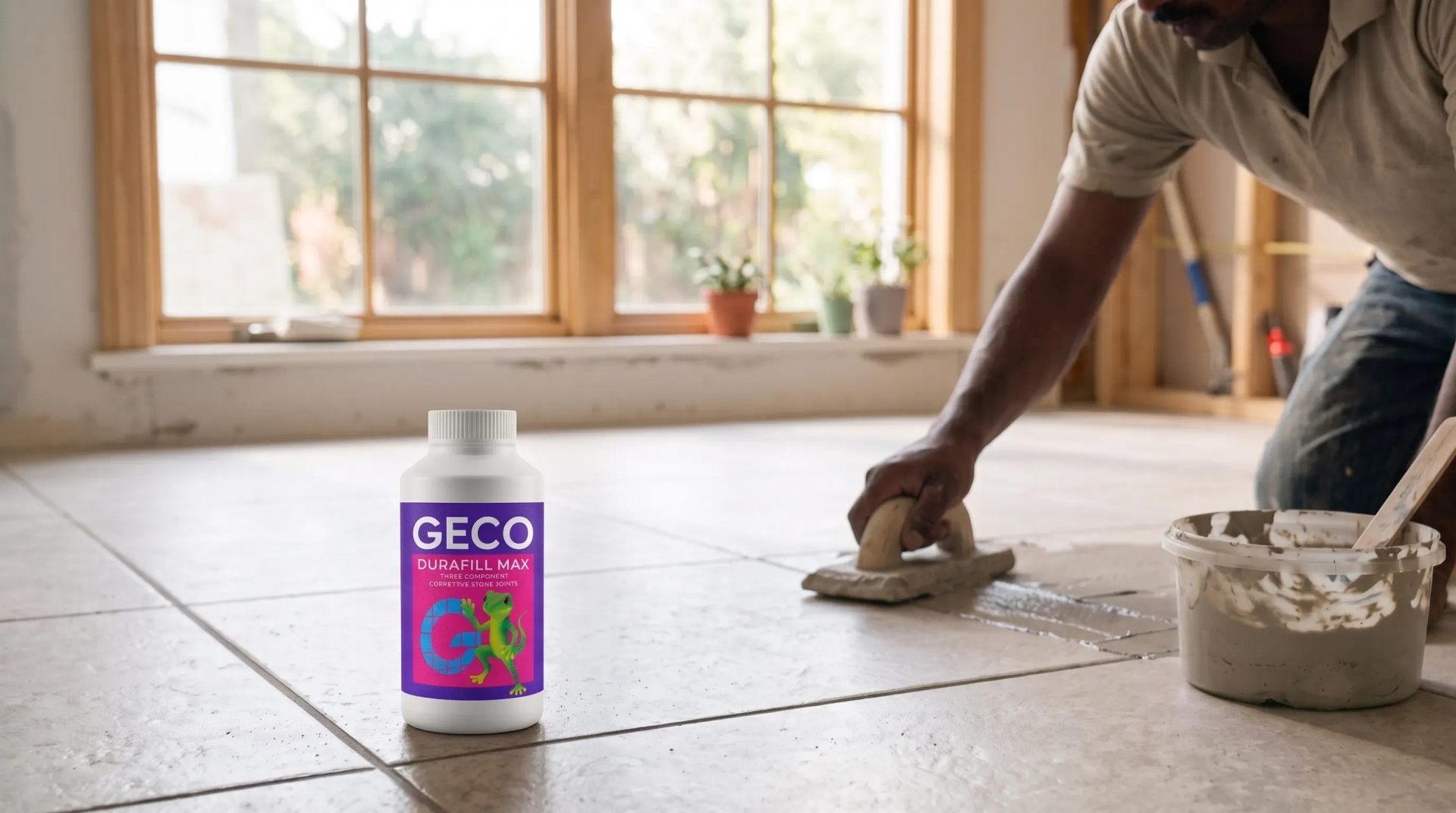
Admixtures, like Geco Durafill Max, can turn grout from a basic filler into a high-performance joint. By raising compressive strength, sharpening adhesion to tile edges, and boosting resistance to cracking from movement and heat, polymer-modified grout delivers far tougher real-world results than the standard stuff. The upgrade pays off most exactly where durability, stability, and lasting appearance matter.
Put simply, the right admixture doesn’t nudge grout a little further. It can double its practical value — making the whole tiled system tougher, longer-lasting, and more reliable.