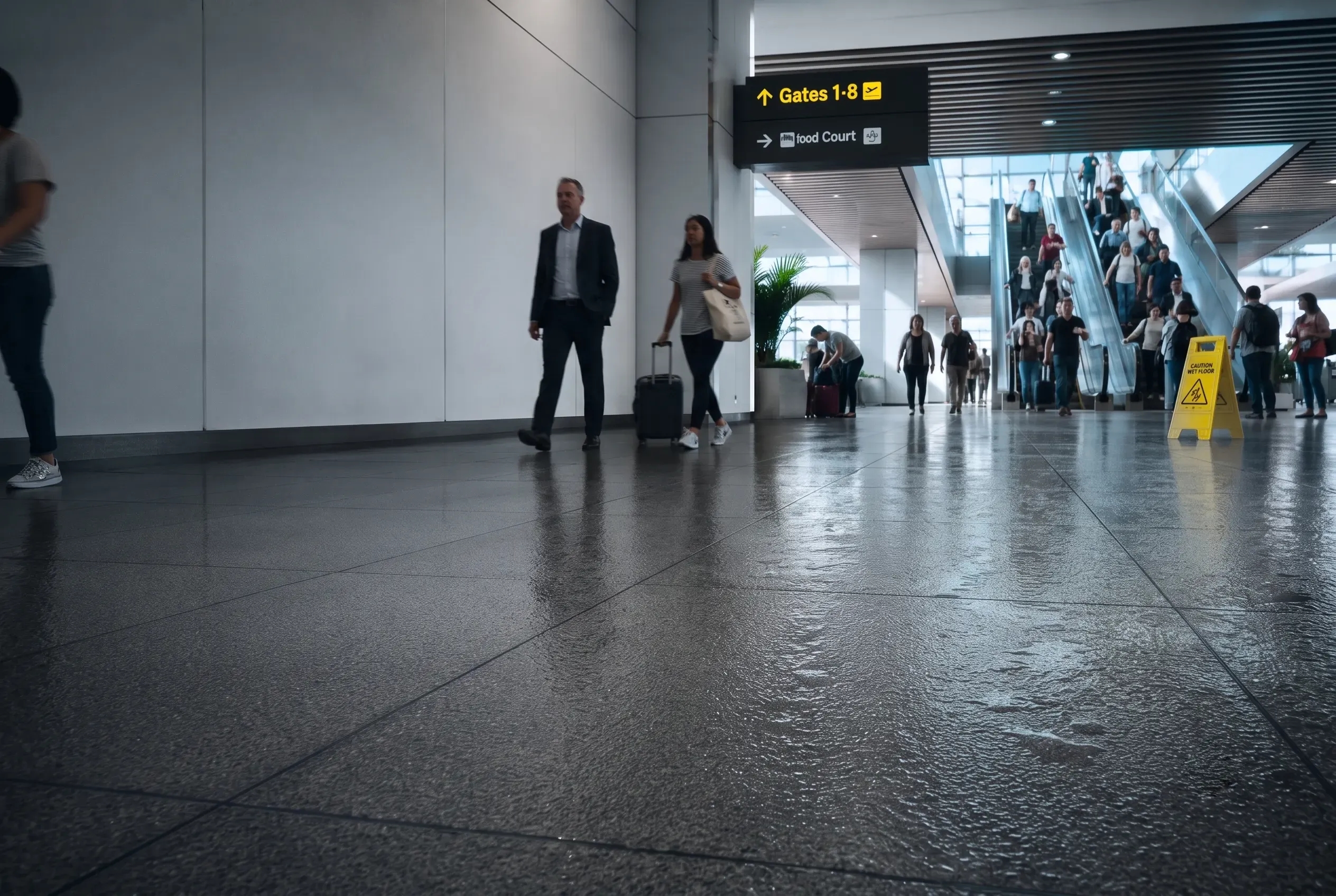
Anti-Slip / Non-Skid Tile Fixing for Wet & High-Traffic Areas
10 August 2026Wet floors don't forgive poor decisions. Whether it's a hospital corridor, a restaurant kitchen, or a poolside terrace, the margin between a safe surface and a dangerous one often comes down to how well the tile is fixed — not just which tile you chose.
Anti-slip tile fixing is a system, not a single material choice. The right adhesive, proper surface prep, the right grout, and disciplined installation all work together to create floors that hold up — safely and reliably — under the conditions they're built for.
Why Slip Resistance Matters
Slip risk increases wherever water, grease, cleaning chemicals, or constant foot traffic are present. Bathrooms, kitchens, pool decks, ramps, loading corridors, and outdoor entryways face this every day. A floor can look and feel solid on installation day, yet still underperform as conditions evolve.
In high-traffic spaces, the challenge goes beyond avoiding slips. The installation must withstand wear, repeated cleaning, moisture exposure, and the constant movement of people and equipment. That's why anti-slip tile fixing must be treated as a complete system — one where every layer of the build matters.
What Makes a Tile Anti-Slip
Anti-slip tiles rely on surface texture, micro-patterns, or material finish to improve grip. Matte and structured finishes tend to outperform polished ones in wet conditions. But surface texture alone doesn't ensure safety.
Adhesion quality matters just as much. Hollow spots, uneven bedding, or weak bonds create instability — tiles that feel slightly loose underfoot are both a safety and a maintenance problem. A secure installation keeps tiles flat, stable, and level: the foundation that everything else depends on.
Common Problem Areas
Some spaces demand more from their fixing systems:
- Bathrooms and shower areas — constant moisture creates persistent slip hazards
- Commercial kitchens — water, oil, and aggressive cleaning agents are the norm
- Hospital and lab corridors — hygiene cleaning is frequent; floors must stay stable
- High-footfall lobbies, malls, and transit hubs — dirt and moisture arrive with every visitor
- Outdoor walkways, pool surrounds, and terraces — rain and weather are relentless
In each of these environments, even the best tile finish falls short if the substrate isn't properly prepared or the adhesive and grout aren't matched to the conditions.
Choosing the Right Fixing System
A dependable anti-slip system starts with the right materials at every layer.
For tile adhesion in demanding conditions, Geco Tilebond Plus tile adhesive delivers strong, reliable bonding to the substrate — exactly where weak adhesion creates the most risk. For joint finishing, Geco Durafill Max tile grout admixture for cement grouts provides durable, abrasion-resistant grout performance that holds up under heavy use, repeated cleaning, and moisture exposure.
Before any adhesive goes down, the substrate must be clean, structurally sound, and free of dust, curing compounds, oil, or loose material. In wet or moisture-prone areas, waterproofing or surface priming is required as a first step.
Grout selection is equally critical. Joints that resist water penetration, staining, and cracking maintain the overall performance of the tiled area over time. In high-traffic spaces, grout also needs to tolerate abrasion and routine cleaning — which is exactly where Geco Durafill Max holds its own.
Installation Practices That Improve Safety
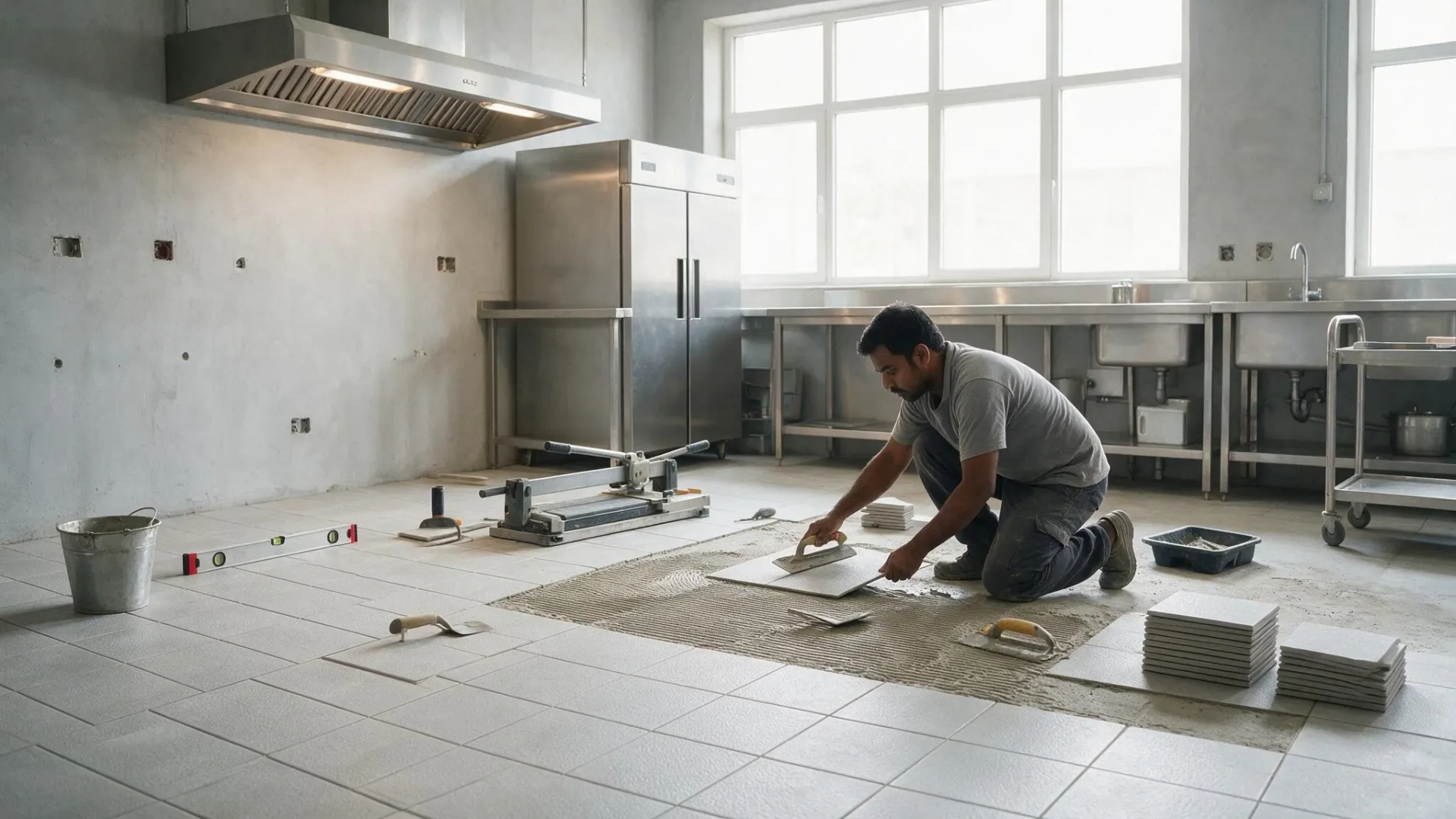
The right materials only go so far. How they're applied determines the final result.
- Level the substrate properly to eliminate slippage — uneven tiles are a trip hazard
- Use full adhesive coverage with Geco Tilebond Plus to prevent hollow areas and weak bonds
- Maintain consistent joint widths for better load distribution and cleaner maintenance
- Fill joints with Geco Durafill Max for a strong, durable grout finish
- Align tile layout with traffic flow in the space
- Allow proper curing time before exposing the floor to foot traffic or moisture
These aren't optional refinements — they're the difference between a floor that performs for years and one that starts failing early.
Wet Areas Need Extra Attention
Water changes the equation entirely. A tile that feels adequate on a dry floor becomes a hazard the moment moisture is introduced. In wet areas, the goal is to reduce both surface slipperiness and installation failure — simultaneously.
That means using tiles with appropriate texture, ensuring effective drainage, and designing the floor so water doesn't collect in low points. Even high-quality anti-slip tiles become hazardous in a poorly drained space.
Regular maintenance matters too. Soap residue, algae, grease, and dust reduce grip over time. Cleaning with the right products preserves the slip-resistant performance the installation was built to deliver.
High-Traffic Areas Need Durability
Busy spaces face a different kind of pressure. Foot traffic, wheeled loads, impact, and frequent cleaning can all wear down a poorly fixed installation. When bonds weaken or tiles shift, safety and appearance suffer together.
For these environments, the fixing system needs to deliver:
- High bond strength
- Resistance to vibration and repeated loading
- Low risk of tile debonding
- Long-term stability under cleaning and heavy use
Geco Tilebond Plus handles the adhesion side of this equation. Geco Durafill Max takes care of joint durability and finish quality. A well-executed installation reduces maintenance costs and prevents costly shutdowns for repairs — in commercial and institutional settings, that reliability is non-negotiable.
Material and Substrate Compatibility
Not every tile works with every surface. Porcelain, ceramic, vitrified tiles, and natural stone each behave differently. Concrete, screed, existing tile, and cement board all have distinct surface properties. Choosing compatible materials prevents bond failure, cracking, and moisture-related problems down the line.
This is why a professional assessment before installation matters. Tile size, porosity, weight, usage intensity, moisture exposure, and cleaning regime all factor into the right system. A well-matched combination outperforms any generic approach.
Conclusion
Anti-slip and non-skid tile fixing is never just about the tile. It's the combination — the right tile, the right adhesive, proper surface preparation, effective drainage, and careful installation — that creates a floor genuinely built to hold.

In wet and high-traffic areas, that combination directly shapes safety, durability, and long-term maintenance. Geco Tilebond Plus and Geco Durafill Max work together as a practical, performance-driven system for the spaces that demand the most.