Cement Grout vs Epoxy Grout: Cost, Durability & When to Use Each
14 July 2026Tile grout might seem like the quiet finish at the end of a tile job — but it does far more work than it gets credit for. The right grout keeps joints clean, resists moisture, stands up to daily wear, and holds the look of your tiled surface together for years. Choose the wrong one, and you'll know it.
Whether you're a homeowner planning a bathroom renovation or a DIY enthusiast tiling your own kitchen, understanding the difference between cement grout and epoxy grout helps you make a smarter, longer-lasting choice from the start.
What Grout Actually Does
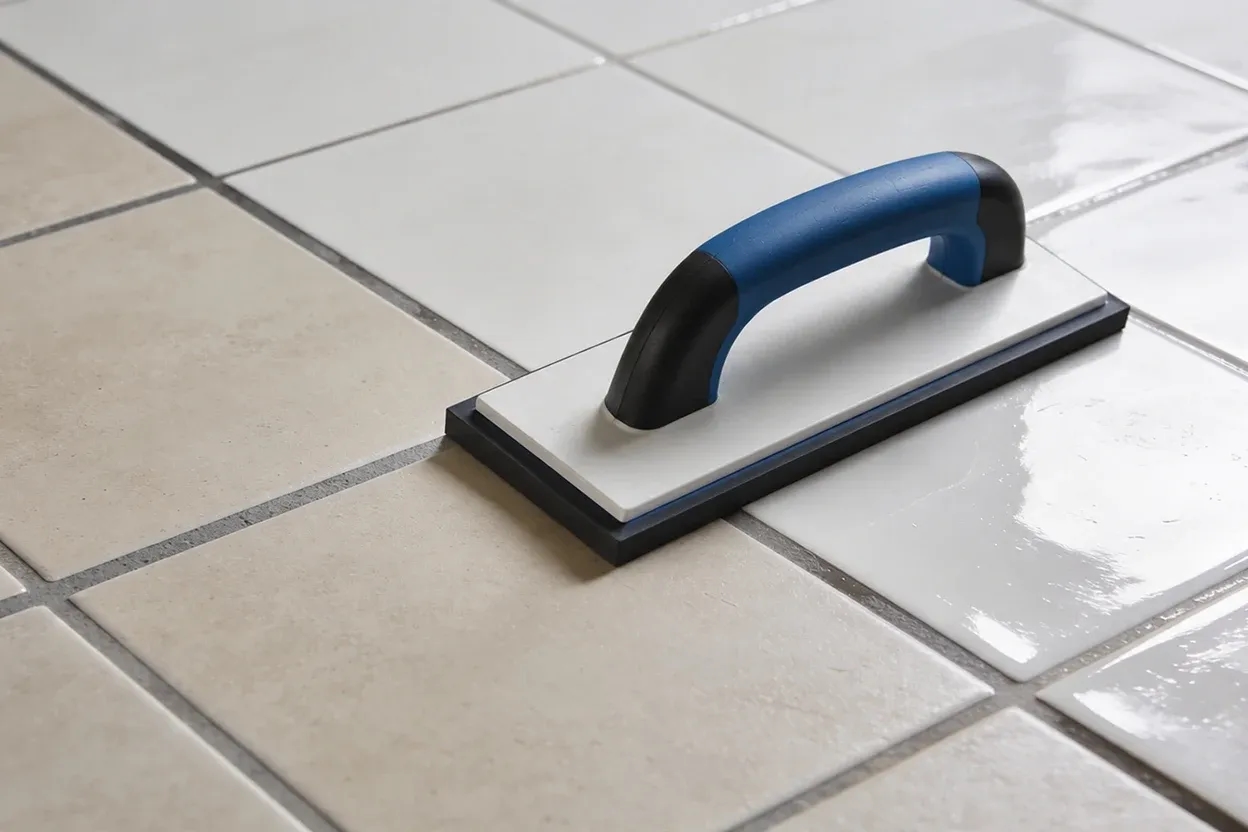
Once your tiles are fixed in place, grout fills the joints between them. It completes the surface, locks in the integrity of the installation, and protects against moisture working its way underneath. In wet areas especially — bathrooms, kitchens, laundry rooms — grout is the line of defence that keeps the whole thing performing.
A poor grout choice leads to staining, difficult cleaning, moisture ingress, and joints that look tired far sooner than they should. It's worth getting this decision right.
Cement Grout: The Classic Option
Cement grout has been around for decades and remains widely used for good reason. It's economical, familiar to most installers, and perfectly suited to lower-demand environments.
Made from cement, fillers, pigments, and additives, it's a straightforward material — and in the right setting, it works well. The key limitation is porosity. Cement grout absorbs moisture, which over time means it can absorb stains, dirt, and discolouration too. Sealing helps, but it adds ongoing maintenance to the picture.
Where cement grout makes sense:
- Living rooms and bedrooms
- Low-moisture wall applications
- Budget-conscious projects where exposure to staining and chemicals is limited
Epoxy Grout: Built for Performance
Epoxy grout is a different material entirely. Formulated from epoxy resins, hardeners, and fillers, it cures into a dense, non-porous joint that resists water, stains, cleaning chemicals, and wear — making it the strong choice for spaces that take a beating.
This isn't just a premium upgrade for the sake of it. In wet areas and high-use spaces, epoxy grout genuinely performs better over time. Here's why it matters:
- Easier to clean. Because the joint is non-porous, soap residue, food splashes, and everyday stains sit on the surface rather than sinking in. Routine cleaning stays routine.
- Better chemical resistance. Epoxy grout handles mild acids and common household cleaners more effectively than cement grout — useful in kitchens, utility rooms, and food-preparation zones where spills are part of daily life.
- More hygienic. Moisture-resistant joints don't stay damp the way porous ones can. That reduces the conditions that encourage bacterial growth — a meaningful benefit in bathrooms, wet rooms, and healthcare environments.
- Longer-lasting appearance. In spaces where grout joints are on display every day, epoxy grout holds its colour and finish more consistently over time.
Where epoxy grout delivers:
- Bathrooms and shower areas
- Kitchens and splashbacks
- Commercial kitchens and food-preparation zones
- Hospitals, clinics, and hygiene-sensitive spaces
- High-use areas exposed to regular water, stains, or cleaning
Cost: Upfront vs Long-Term
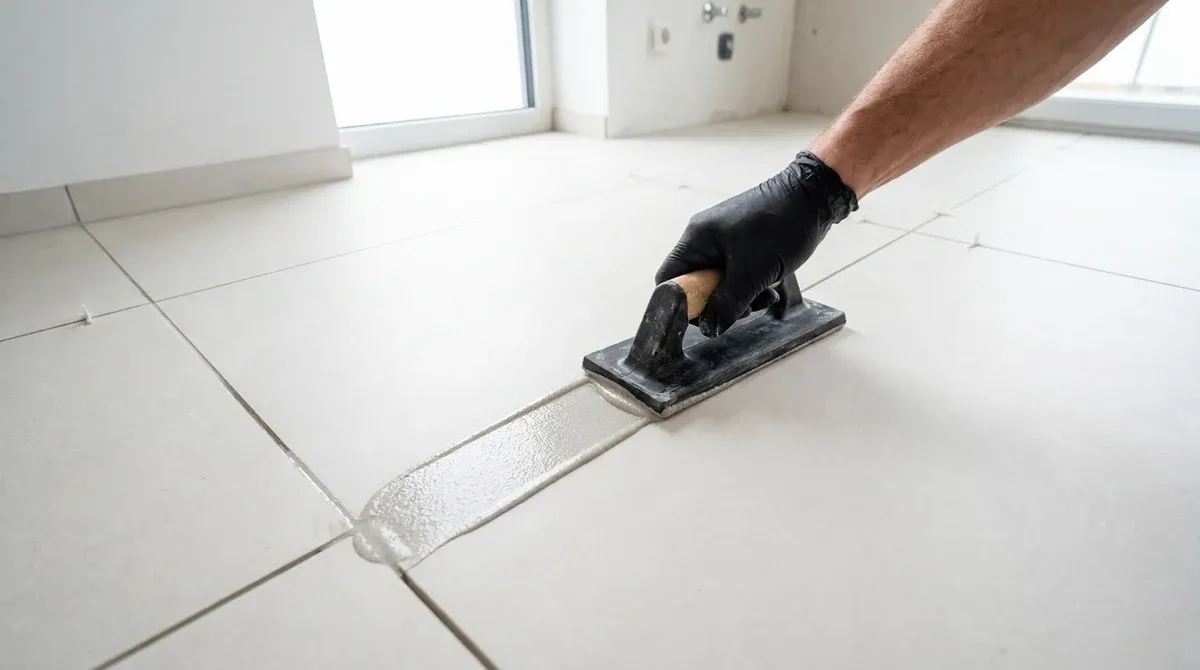
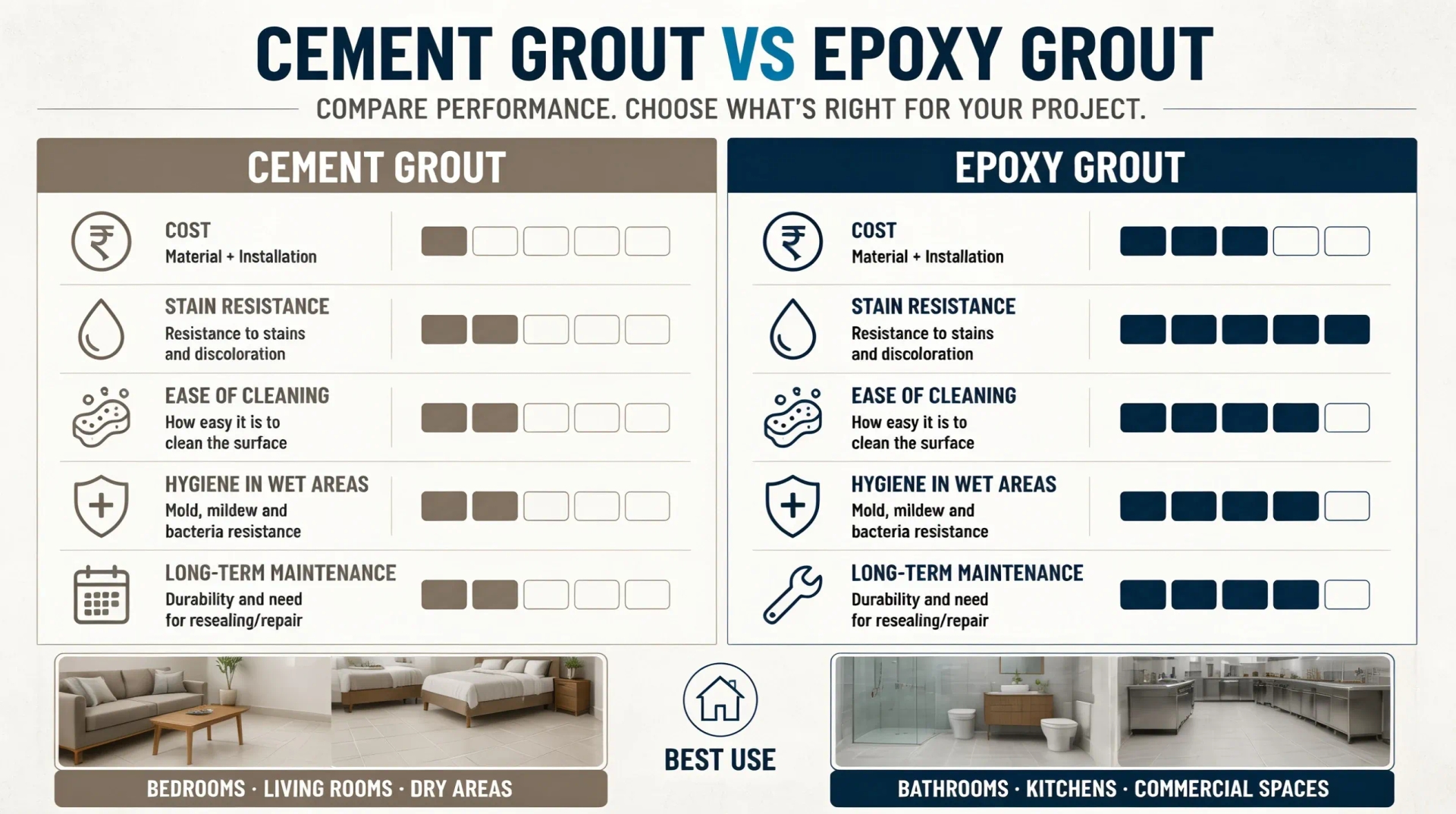
Cement grout costs less at the point of purchase — that part is true. But the full picture includes resealing, stain removal, and the possibility of earlier replacement if the conditions push it beyond its limits.
Epoxy grout carries a higher upfront cost and a more specialised application process. In demanding areas, that investment often pays back through easier maintenance, less remediation, and a surface that keeps performing without extra effort.
Durability: How Each Holds Up Over Time
In standard interior conditions — a bedroom, a living room wall — cement grout holds up fine. Push it into wetter, harder-working environments, and its porosity starts to show: discolouration, moisture absorption, and more frequent maintenance become part of the picture.
Epoxy grout is engineered for tougher conditions. Its dense structure resists staining, chemical exposure, and repeated washing more effectively — which is why it's the better long-term specification where performance and cleanliness are both priorities.
Which One Is Right for Your Project?
Choose cement grout for dry, lower-traffic areas where high chemical or stain resistance isn't essential, and where budget is the primary driver. It's a practical choice for many standard residential spaces.
Choose epoxy grout for wet areas, kitchens, high-use surfaces, or anywhere hygiene matters. When easy maintenance, cleaner joints, and reliable long-term performance are on the brief — epoxy is the smarter specification.
The GECO Perspective
At GECO, we believe a tiled surface should perform as well as it looks — not just on day one, but across the lifetime of the space. That's why the joint between your tiles deserves the same thought as everything beneath them. The adhesive holds the tile; the grout completes the system.
In wet areas, kitchens, and high-use spaces, Geco Jointfill Epoxy delivers the kind of performance that keeps surfaces cleaner, maintenance lighter, and results lasting. For standard interior applications, Geco Jointfill offers a reliable, consistent finish that handles everyday demands without complication. Whichever you choose, the goal is the same: a finished surface that holds together beautifully, and keeps holding.