Best Tile Adhesive & Grout for Bathroom: Complete Guide for Wet Areas in India
04 July 2026Bathrooms are among the most demanding environments in any home. Daily splashing, standing water, steam, cleaning chemicals, and constant temperature changes put immense stress on tiled surfaces — not just on the tiles themselves, but on everything holding them in place. In Indian homes, where bathrooms are scrubbed with buckets, drenched in hard water, and cleaned with strong chemicals, the wrong adhesive or grout can quietly cause loose tiles, stubborn stains, damp patches, and costly repairs.
The best bathroom tile system goes well beyond choosing attractive tiles. It demands the right adhesive, the right grout, and the right installation approach — together forming a moisture-resistant assembly that holds firm through years of daily use. That is where a purpose-built pairing like Geco Tilebond Plus and Geco Jointfill Epoxy tile grout makes a real difference for wet areas across India.
Why Bathroom Tile Surfaces Fail
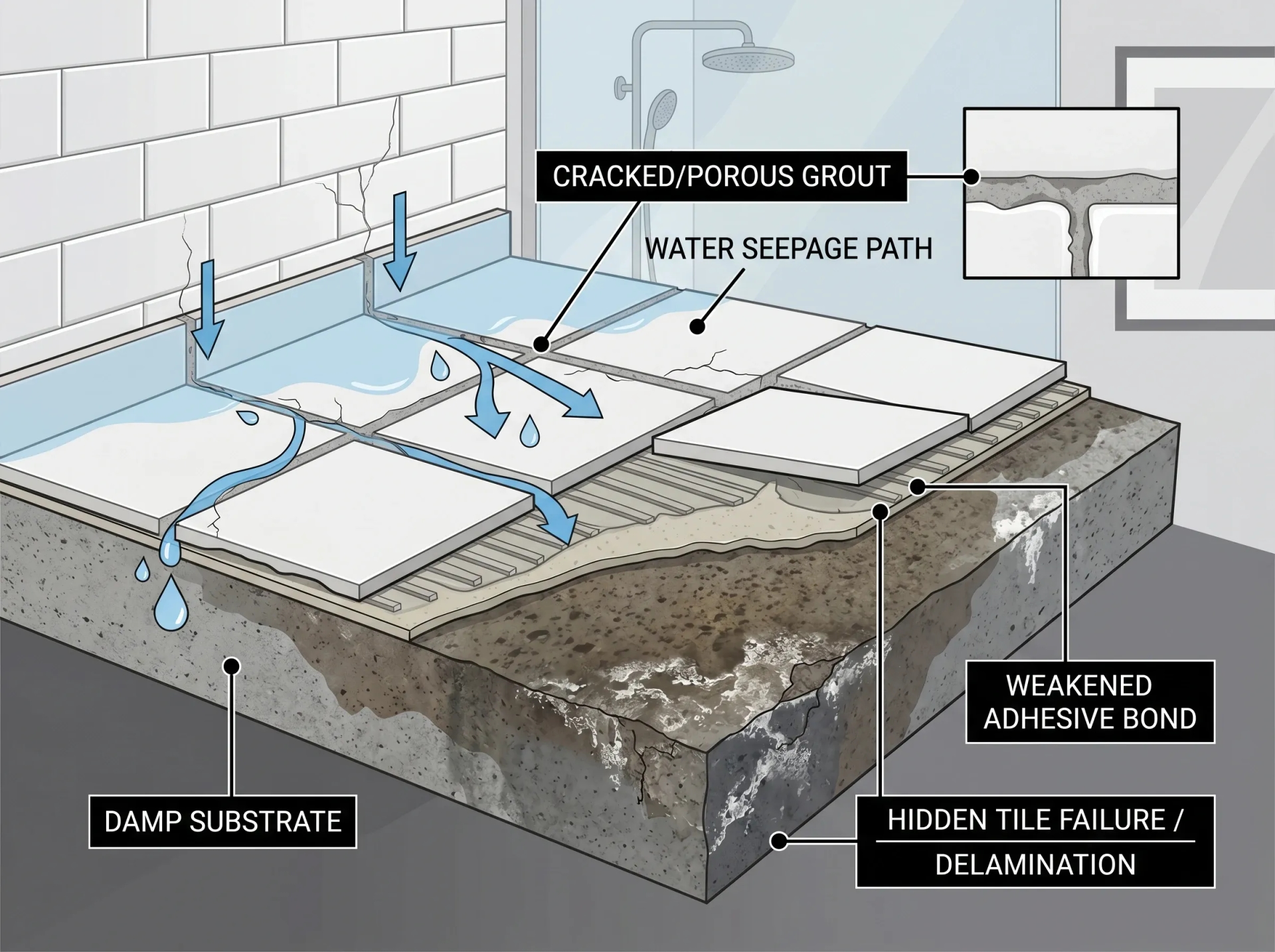
Bathroom tile failures rarely announce themselves. Water enters through tiny cracks or porous grout joints, travels silently into the adhesive layer, and gradually weakens the bond between tile and substrate. Over time, you may notice hollow sounds when tiles are tapped, loose edges, hairline cracks in grout, or seepage marks appearing on adjoining walls and ceilings.
One of the most common misconceptions in tile installation is that grout is waterproof. It is not. Standard cement-based grout is water-resistant, but it remains porous enough for moisture to penetrate over time — especially in wet areas cleaned daily or exposed to shower spray. Once moisture reaches the substrate, the damage moves well beyond the surface and begins compromising the structure underneath.
The Challenges of Bathroom Maintenance
A tiled bathroom never really gets a long dry period. Water from bathing, bucket use, mopping, and washing creates a continuous cycle of wetting and drying that stresses the entire tile assembly. This repeated exposure gradually weakens grout, reduces bond strength, and creates conditions that encourage mould and mildew growth.
Bathroom tiles also face harsh cleaning agents, soap scum, and mineral deposits from hard water. Acidic or abrasive cleaners slowly degrade cementitious grout, while hard-water residue discolours joints and makes ongoing cleaning harder. In practical terms, a bathroom becomes a maintenance problem whenever the installation was not designed for wet-area performance from the start.
The Problem with Constant Water Flow
Constant water flow is one of the most significant stress factors in any bathroom. Shower zones, floor traps, and areas around wash basins face moving water repeatedly — and moving water is more damaging than occasional splashes because it persistently seeks out weak points. Even when the tile surface appears intact, water can still travel through grout joints and along micro-gaps into the layers below.
In Indian bathrooms, water often lingers on floors or pools in corners due to limited slope, inadequate drainage, or infrequent drying between uses. This keeps grout lines wet for extended periods, increasing the risk of softening, staining, cracking, and seepage into the adhesive layer. Over time, that cycle causes tiles to lose grip, and the surface fails from the underside upward.
What a Bathroom Tile System Must Deliver
A bathroom tile system needs to do more than hold tiles to a wall or floor. It must form a stable, moisture-resistant assembly capable of handling daily exposure and remaining structurally sound for years. Three properties are non-negotiable: strong adhesion, low water absorption, and enough flexibility to tolerate minor substrate movement without cracking.
For the tile layer, the adhesive must bond firmly to both the substrate and the tile back, support full coverage, and minimize voids beneath the tile. For the joint layer, the grout must resist water absorption, repel staining, and seal gaps so moisture cannot easily enter the assembly. When adhesive and grout are both selected correctly, the bathroom surface lasts longer and stays easier to maintain — whether you are a professional contractor or a DIY enthusiast building something you can be proud of.
What to Look for in a Tile Adhesive
The right bathroom tile adhesive should be polymer-modified, high-strength, and specifically suitable for wet areas. Polymer modification improves adhesion and ensures the bond performs reliably in moisture-prone conditions — well beyond what traditional cement-only methods can offer. The adhesive should also spread evenly to minimize empty pockets beneath the tile, since hollow spots collect water and weaken the bond over time.
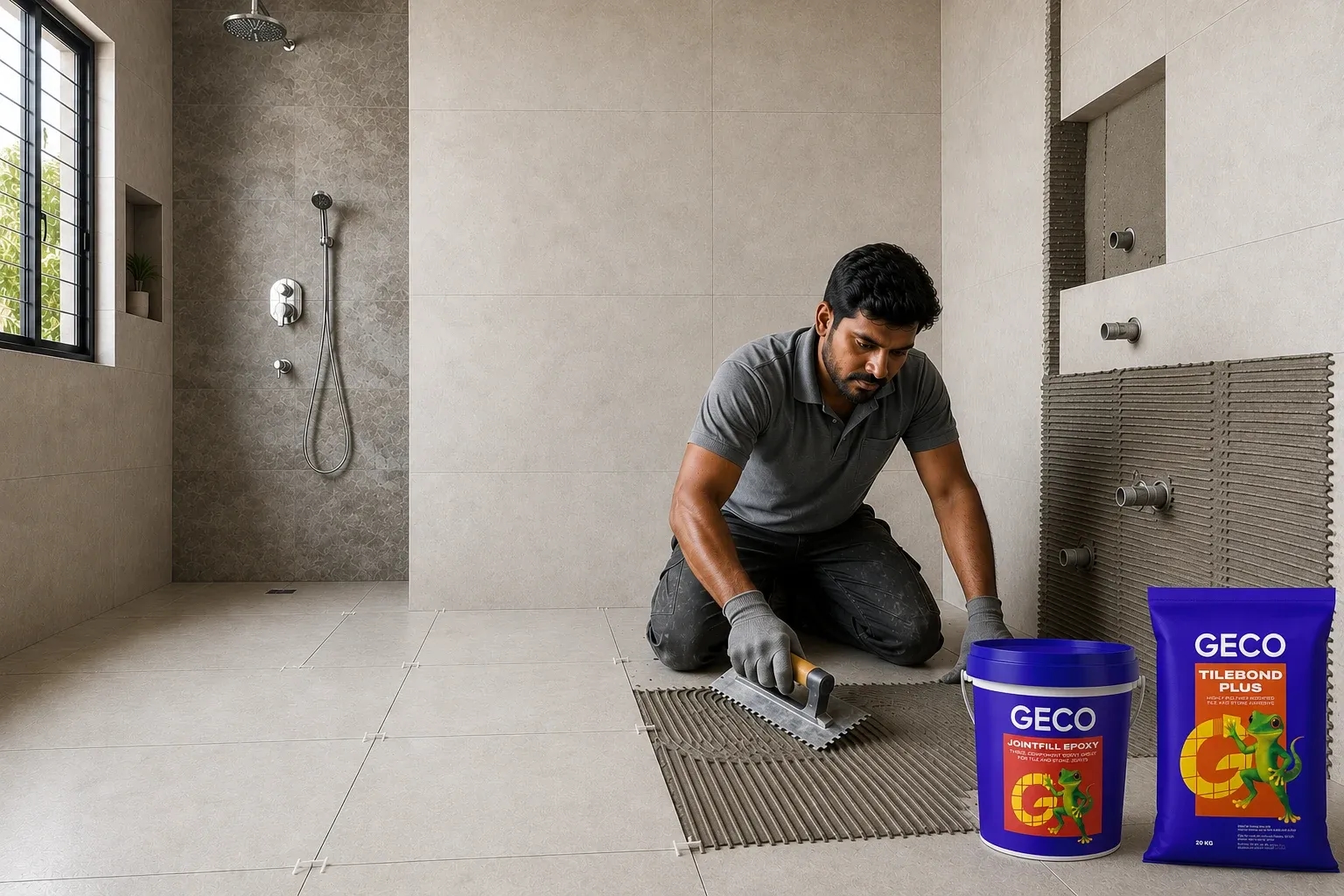
Geco Tilebond Plus is engineered precisely for this requirement. It is a highly polymer-modified cementitious adhesive designed for fixing tiles and stones on walls and floors, internal and external surfaces, and wet areas including bathrooms and shower enclosures. It is also suited for tile-on-tile application and compatible with vitrified tiles, natural stone, and granite — making it equally valuable for new installations and renovation projects.
Why Geco Tilebond Plus Holds Up Where It Counts
Bathroom performance depends on far more than initial stickiness. A strong bathroom adhesive must maintain bond strength through repeated wetting, cleaning, and small substrate movements. It must also resist the gradual tile debonding that is often the first visible sign of hidden water damage beneath the surface.
Geco Tilebond Plus delivers the wet-area suitability, water resistance, and bond strength that Indian bathrooms demand. This is especially critical in shower enclosures, sink walls, and bathroom floors where water exposure is daily and unavoidable. Applied correctly on a properly prepared substrate, it provides a more durable and dependable foundation than traditional cement bedding — one that stays engineered to hold.
Why Grout Choice Is More Critical Than It Looks
Grout is frequently treated as a cosmetic finishing step. In reality, it is one of the most structurally important elements in any bathroom installation. Grout fills the gaps between tiles, but it also determines how easily water can move into the tile assembly. If grout cracks, shrinks, or absorbs too much moisture, it becomes a direct pathway for water to reach the adhesive and substrate below.
That is why epoxy grout consistently outperforms standard cementitious grout in bathrooms and other wet areas. Epoxy grout is denser, less porous, and significantly more resistant to water, stains, and mould. In everyday use, this translates to easier cleaning, fewer discoloration issues, and stronger long-term protection for the entire tile installation.
Why Geco Jointfill Epoxy Seals What Standard Grout Cannot
Geco Jointfill Epoxy tile grout is purpose-built for the most demanding part of any wet-area installation: the joints. It is a water-repellent, polymer-modified grout formulated for joint widths of 1 to 6 mm, with non-dusting performance, self-levelling behaviour, and durable joint integrity. In bathroom environments, these properties matter — finer joints and smoother finishes are easier to keep clean and far less likely to trap dirt and moisture over time.
Using Geco Jointfill Epoxy in shower areas and other high-moisture zones creates a more protective joint line. It actively reduces water entry through the grout, which in turn protects the adhesive layer and the substrate beneath. For Indian bathrooms that face frequent water usage, that additional barrier significantly reduces maintenance problems over the life of the installation.
The Real Cost of Seepage
When water seeps through compromised grout, it does not stop at the visible surface. It reaches the substrate — whether cement plaster, screed, or another base layer — and begins reducing bond strength, creating uneven support under tiles, and spreading moisture laterally into adjacent walls or flooring.
The consequences can include hollow tiles, cracking, grout deterioration, mould growth, and in severe cases, structural decay. In some bathrooms, seepage travels through the wall system and damages neighbouring spaces entirely. Bathroom grouting should always be treated as a critical waterproofing measure, not just a final aesthetic step.
Key Properties to Demand from Any Bathroom System
For wet areas, the performance criteria are straightforward. The adhesive must deliver strong bond strength, moisture resistance, full tile coverage, and compatibility with the chosen tile type. The grout must resist water absorption, staining, shrinkage, and cracking — while remaining easy to clean and stable through repeated washing.
In practical terms: the tile layer needs grip, the grout needs sealing ability, and the full assembly needs resilience against daily wetting. If any part of that system is weak, the entire surface becomes vulnerable. A strong adhesive-grout combination protects the investment better than any premium tile alone.
The Right System for Indian Bathrooms
For most Indian bathrooms, the most durable long-term choice is a high-performance adhesive paired with a moisture-resistant grout. Geco Tilebond Plus is a proven choice for fixing tiles in wet areas. Geco Jointfill Epoxy tile grout is the smart answer for joints that face constant exposure to water and cleaning. Together, they form a more reliable system than traditional cement bedding and standard grout — one engineered to hold through everything a bathroom throws at it.
This pairing performs especially well in shower walls, bathroom floors, utility areas, and renovation projects where moisture is already a concern. It delivers better stability, stronger stain resistance, and significantly less risk of hidden seepage damage. For contractors, builders, and homeowners alike, that means a cleaner finish, fewer callbacks, and a surface that holds up for years.
Conclusion
A bathroom tile surface lasts only when the adhesive, grout, and substrate work together against daily moisture. The biggest threats — constant water flow, porous grout, hidden seepage, weak bonding, and long-term substrate damage — are preventable with the right product choices and proper installation.
For Indian bathrooms, Geco Tilebond Plus and Geco Jointfill Epoxy tile grout make a practical, high-performance combination. They address the two primary failure points in wet-area tiling: the bond beneath the tile and the joints between tiles. Specified and installed correctly, they help maintain a cleaner, stronger, and more reliable bathroom surface for years to come — because what holds a bathroom together should be just as well-engineered as what goes on top.