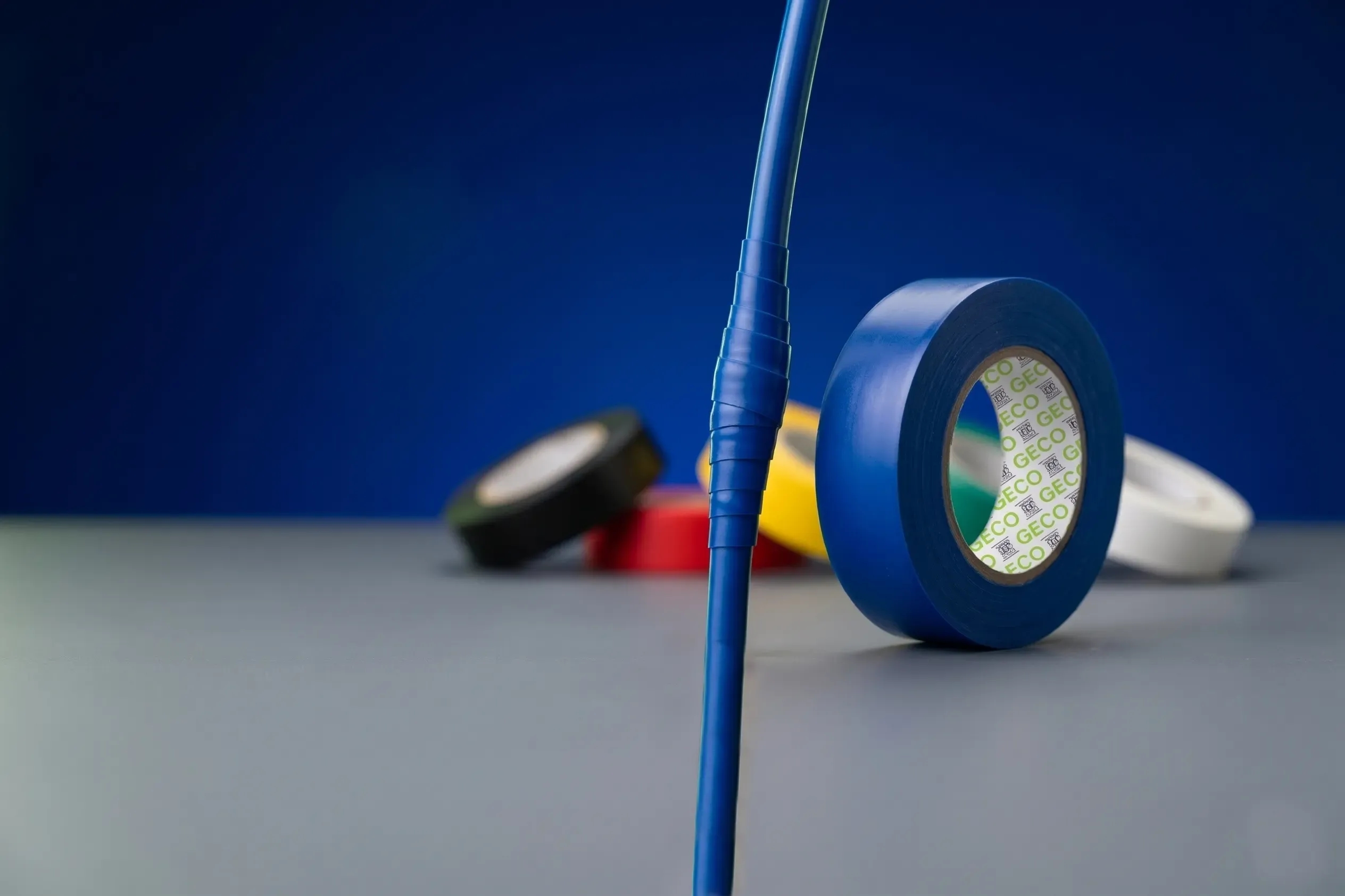
Why Tape Quality Matters in Electrical Safety and Wire Insulation
12 November 2026Electrical insulation tape looks like a simple consumable. In reality, it's the quiet layer that keeps wires, cables, joints and connections protected, holding firm against accidental contact, moisture, wear and time.
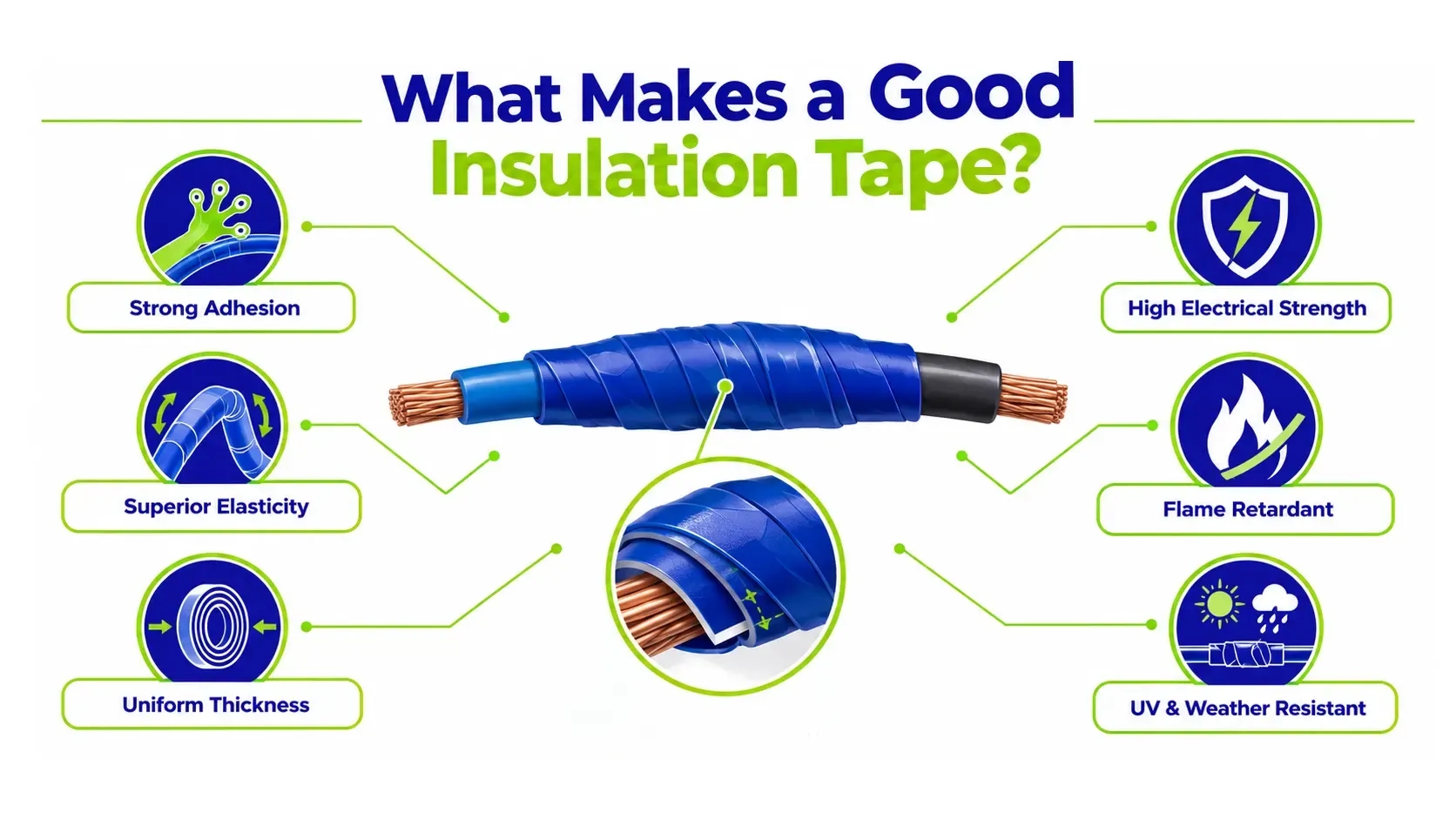
But not every roll holds up the same way. Adhesive strength, elasticity, thickness, electrical resistance, flame performance and weather durability all shape how safe an installation is, and how long it lasts. Whether you're an electrician on a commercial site or a homeowner choosing an electrical insulation tape, here's what to look for.
A Small Roll With a Serious Job
Insulation tape covers wire joints, splices, exposed sections, cable ends and connections. It's also used for bundling, colour coding, marking, reinforcing, sealing and protecting wires and cables. Its core job is to create a non-conductive barrier around electrical components, keeping conductors safely separated from people, tools and surrounding materials.
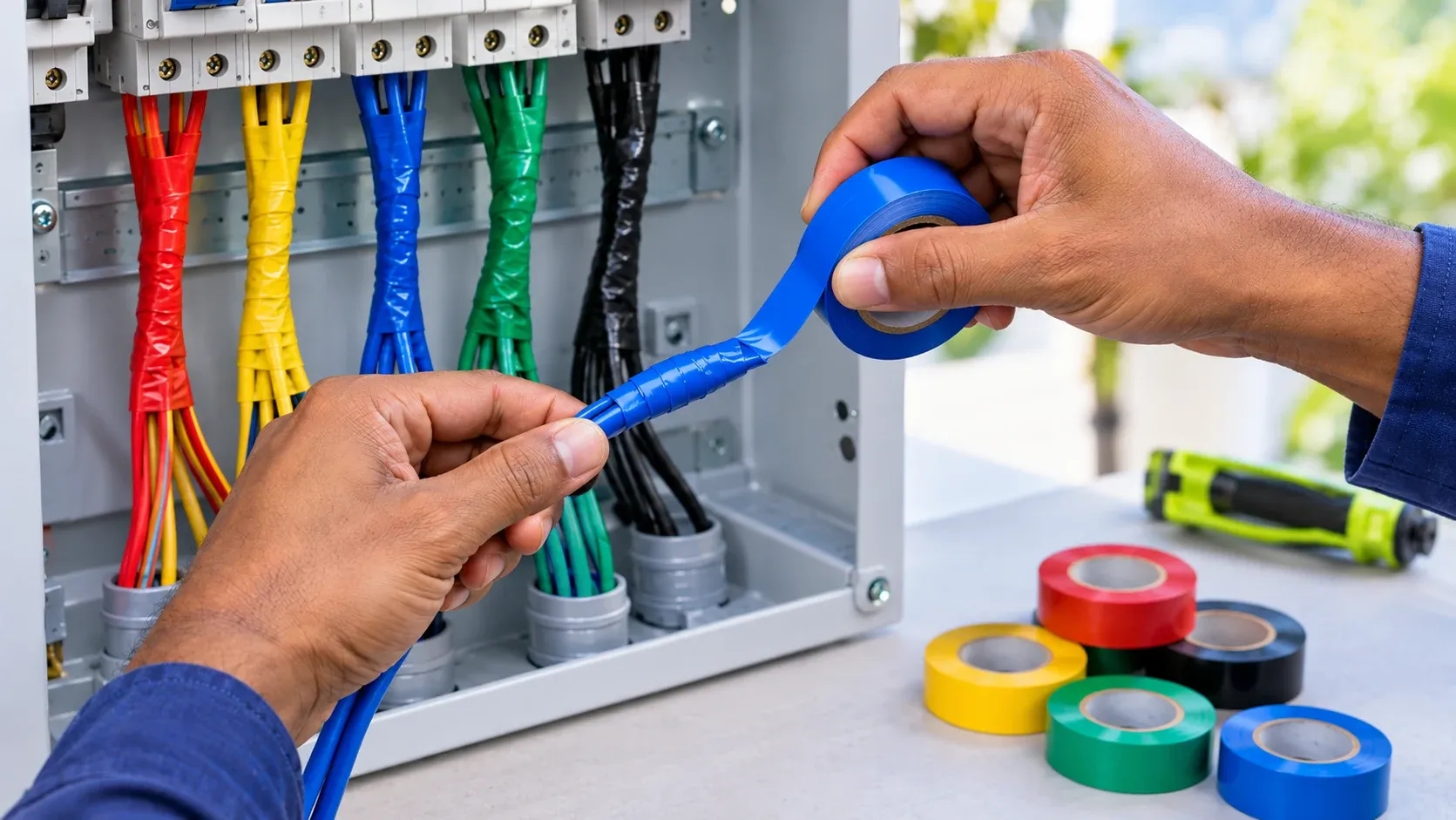
That barrier is only as good as its hold. Tape that loses adhesion, cracks, shrinks or peels away leaves the wire open to moisture, dust, heat, abrasion and mechanical stress, the very conditions behind short circuits, leakage and overheating. Quality tape keeps the barrier intact, so the protection lasts as long as the installation does.
Adhesion: The Grip That Keeps Insulation Intact
Adhesion is where insulation tape earns its keep. Nature worked this out long ago: a gecko holds fast to almost any surface because microscopic hairs on its toes grip every contour. Good insulation tape follows the same principle. It must stay firmly attached to the wire and to itself, wrap after wrap.
Weak adhesive lets edges lift and tape unwind, especially around bends, joints and uneven surfaces. Heat, humidity, vibration and regular handling only add to the strain.
Look for a tape that offers:
- Strong initial grip
- Long-lasting adhesion
- Reliable bonding between overlapping layers
- Resistance to edge lifting and flagging
- Compatibility with commonly used wire and cable surfaces
Good adhesion keeps the insulating layer continuous for the full-service life of the installation.
Elasticity: A Wrap That Fits Every Contour
Wires and cable joints are rarely uniform. Bends, terminals, connectors and changes in diameter all call for a tape that conforms smoothly to the shape beneath it. Tape with low elongation can split during application or leave gaps around irregular surfaces, and every gap weakens the insulation.
A flexible tape stretches moderately as you wrap, hugging the surface closely without tearing, and stays stable once it's in place. For quality PVC insulation tapes, look for elongation values of around 150% or higher, depending on the product and applicable standard.
Thickness: Consistent Protection, Wrap After Wrap
Thickness shapes both the physical and electrical performance of the tape. Too thin, and it offers little defence against abrasion, punctures and the environment.
A good electrical tape should have:
- Uniform thickness across the roll
- Reliable coverage over joints and connections
- Sufficient resistance to tearing and puncturing
- Consistent performance from the first wrap to the last
Electrical Strength: A Barrier That Holds Under Stress
The tape's backing must resist the flow of electrical current. This is measured as dielectric or electrical strength, usually expressed in kilovolts per millimetre of thickness. The higher the electrical strength, the more electrical stress the material can withstand before it breaks down. Quality PVC insulation tapes are tested under normal conditions and after humid conditioning, so you know how they perform when conditions get tough.
Insulation resistance tells you how effectively the material resists current flowing through it. Together, these two properties show whether a tape can deliver dependable electrical separation. They matter most at wire joints and cable connections, where the insulation has to do its job without compromise.
Flame Retardance: An Added Layer Of Safety
Electrical faults can generate heat, sparks or flames. Insulation tape is no substitute for proper electrical protection, but a flame-retardant tape adds a valuable extra margin of safety.
Flame-retardant materials resist ignition and slow the spread of flame compared with ordinary combustible materials. That matters in electrical panels, cable bundles, machinery, buildings and enclosed spaces. When choosing tape, check that its flammability has been tested and that its claims are backed by technical documentation or recognised standards.
Weather and UV Resistance: Built For The Outdoors
Outdoor installations face sunlight, rain, humidity, dust and shifting temperatures. Over time, this exposure can leave ordinary PVC backing and adhesive brittle, discoloured, loose or cracked.
UV and weather resistance help tape stay flexible and protective for longer on outdoor wiring, equipment connections, signage, lighting systems, agricultural installations and construction sites. Even weather-resistant tape works best as one part of a complete protection strategy, alongside proper enclosures, cable glands, conduit and waterproofing systems.
Standards: Performance You Can Verify
A technical data sheet tells you far more than a product label. Look for dimensions, adhesion, tensile strength, elongation, electrical strength, insulation resistance, flammability and the test methods used.
Compliance with a recognised standard, such as BIS standard IS 7809 for PVC electrical insulation tape, gives you a clear benchmark for comparing products. It doesn't replace correct application, electrical testing or professional installation, but it does tell you what performance to expect.
For contractors, electricians, distributors and project managers, documented performance means smarter purchasing decisions, based on proof rather than appearance or price.
Colour Coding and Maintenance
Insulation tape comes in several colours, including black, red, yellow, green, blue and white, making it easy to identify conductors, circuits, cable groups and maintenance areas.
Use coloured tape consistently with your project's wiring practices and applicable electrical codes. Colour supports proper labelling and testing; it doesn't replace them. Durable tape also makes future inspection easier. When the wrap stays intact and clearly visible, maintenance teams can spot protected joints and potential damage quickly.
Choose Performance Over Price
The cheapest roll isn't always the most economical. Tape that fails early brings rework, downtime, replacement materials and potential equipment damage along with it.
Judge a tape on its complete performance profile, not a single feature. Strong adhesion delivers most when it works together with elasticity, electrical strength, flame resistance, consistent thickness and environmental durability.
Conclusion: Protection That Holds
Electrical insulation tape is a small component with a big responsibility. Its quality decides how well wires and joints stay protected against electrical stress, moisture, heat, movement, abrasion and ageing.
That's the thinking behind Geco Shielder . Like the gecko that inspires every GECO product, Shielder is built around one idea: a grip you can rely on. Its high-tack adhesive holds firm to the wire and to itself, while superior elasticity lets it hug bends, joints and connectors without splitting.
And the numbers back it up. Shielder complies with BIS standard IS 7809 (Part 3, Sec. 1), and its typical values comfortably exceed the specified requirements.
Flame retardant, UV and weather resistant, and RoHS compliant, Shielder is suited to wire and cable joints, splices and connections in residential, commercial and industrial applications up to 440V. It comes in six colours (black, red, yellow, green, blue and white) for quick, clear colour coding.
Whether you're wiring a factory floor or fixing a connection at home, choose tape that's built to last, and apply it correctly as part of a complete electrical protection system. With Geco Shielder, that protection holds.